
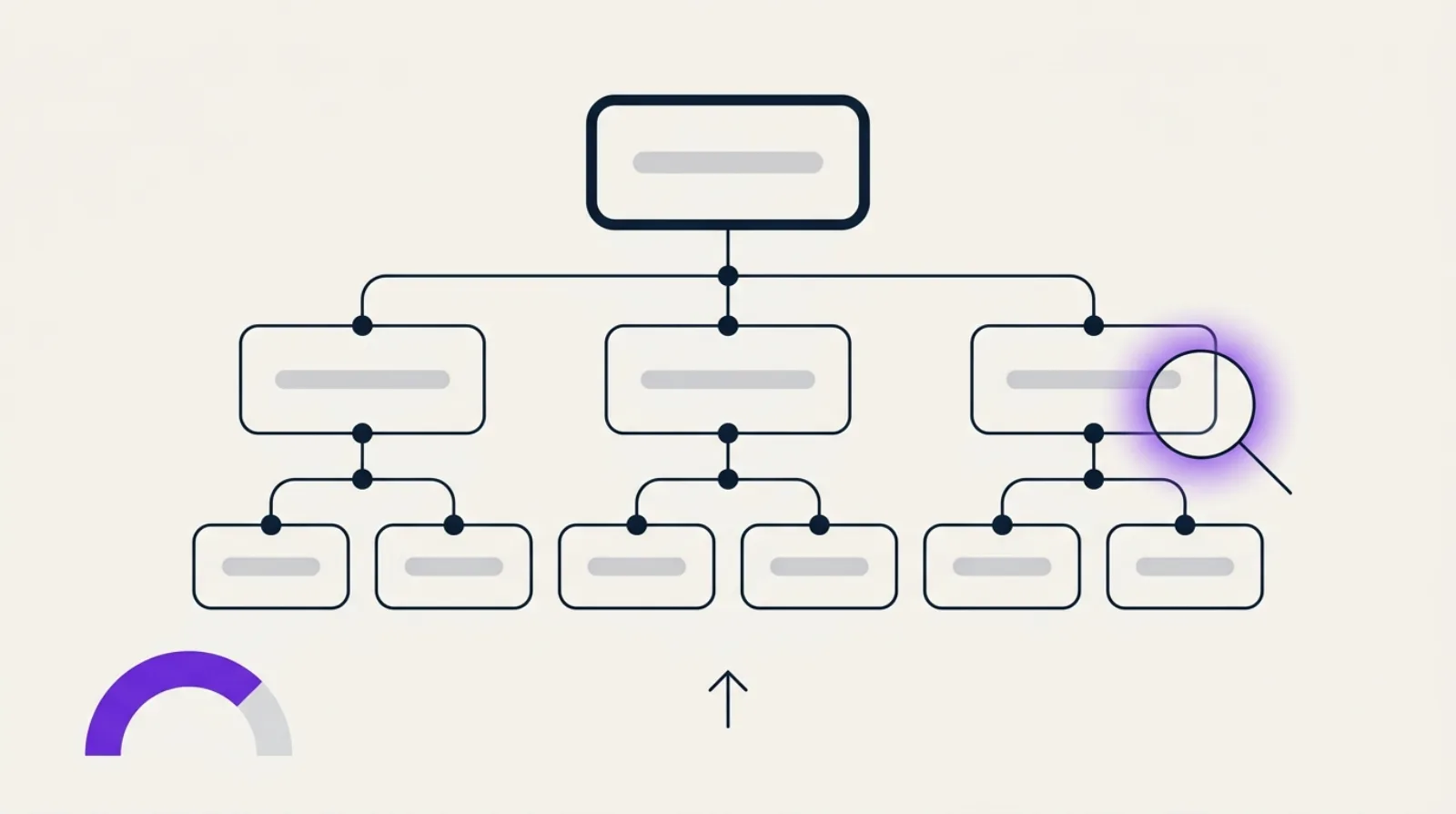
Schema.org structured data is one of the most underused SEO levers for SaaS products and e-commerce sites. In 2026, it serves a dual purpose: improving your Google visibility and increasing your chances of being cited in AI-generated answers from ChatGPT Search, Perplexity, and Google AI Overviews.
This guide walks you through the most impactful Schema types, how to implement them in JSON-LD, and how to verify they work — no plugin, no external library required.
What is Schema.org?
Schema.org is a shared vocabulary created in 2011 by Google, Bing, Yahoo, and Yandex to describe web page content in a format that search engines can parse directly.
In practice: it is a set of types (Article, Product, FAQPage, HowTo, Organization, WebSite…) that you inject into your pages as JSON-LD — a <script type="application/ld+json"> block in your page <head>.
Why it matters for SEO:
- Eligibility for rich snippets (FAQ accordion, star ratings, prices, event dates) → average CTR increase of +15 to +30% on affected pages
- Better content classification in the index = stronger rankings on niche queries
- E-E-A-T signal (Expertise, Experience, Authoritativeness, Trustworthiness) via
author,organization,datePublished
Why it matters for GEO:
Generative models prefer content that describes itself precisely. A page with a FAQPage schema is more easily parseable by training crawlers, more likely to be used as a factual source in an AI response, and better positioned for conversational queries.
If you haven't read the GEO introduction yet, start with our complete Generative Engine Optimization guide.
The 5 most impactful Schema types in 2026
1. Article / BlogPosting / TechArticle
The base type for all editorial content. The useful minimum:
{
  "@context": "https://schema.org",
  "@type": "BlogPosting",
  "headline": "Article title",
  "datePublished": "2026-06-06",
  "dateModified": "2026-06-06",
  "author": {
    "@type": "Person",
    "name": "Your name",
    "sameAs": "https://linkedin.com/in/your-profile"
  },
  "publisher": {
    "@type": "Organization",
    "name": "Your brand"
  },
  "description": "Article meta description"
}
The author.sameAs field is the most underused — and yet the most important for GEO. ChatGPT and Perplexity use it to assess whether the source is a known, trusted entity before citing it.
2. FAQPage
The highest ROI type in 2026. If you have a visible FAQ section on the page, this schema makes you eligible for the FAQ accordion in SERPs (two additional Q&As directly below your snippet) and significantly increases the chances of being pulled into an AI Overview.
{
  "@context": "https://schema.org",
  "@type": "FAQPage",
  "mainEntity": [
    {
      "@type": "Question",
      "name": "What is the difference between JSON-LD and Microdata?",
      "acceptedAnswer": {
        "@type": "Answer",
        "text": "JSON-LD injects into a separate script tag, independent of visible HTML. Microdata embeds inside HTML elements. Google recommends JSON-LD for its maintainability."
      }
    }
  ]
}
Golden rule: every Q&A in the schema must match a Q&A that is actually visible in the HTML. A schema describing content absent from the page violates Google's guidelines.
For a deep dive into how Google AI Overviews selects its sources, read our citation pipeline analysis.
3. HowTo
Ideal for step-by-step guides. Generates a rich snippet with each step title visible in the SERP. In 2026, it's also a strong signal for "how to X" queries in AI engines — ChatGPT in particular processes sequentially structured content well.
4. Product + AggregateRating
For e-commerce and SaaS with a pricing page. The aggregateRating field triggers star ratings in SERPs — one of the highest-CTR rich snippets (+35% average). Strict condition: reviews must be real, verifiable, and correspond exactly to the product on the page.
5. Organization + WebSite + sameAs
Set once on your homepage, statically. Defines your brand entity for Google's Knowledge Graph and for AI engines that index named entities:
{
  "@context": "https://schema.org",
  "@type": "Organization",
  "name": "Your SaaS",
  "url": "https://your-site.com",
  "logo": "https://your-site.com/logo.png",
  "sameAs": [
    "https://twitter.com/your-account",
    "https://linkedin.com/company/your-name"
  ]
}
The sameAs array tells AI engines that your site and your social profiles form a single entity. It's one of the most direct entity signals for improving citation accuracy in generative responses.
The 5 most common mistakes
| Mistake | Impact | Fix |
|---|---|---|
| Copied schema without adapting values | Misleading data → possible penalty | Dynamic values matching actual content |
datePublished frozen at launch date | Content perceived as stale by AIs | Update dateModified on every revision |
| FAQPage schema with no visible FAQ in the page | Invalid — Google may penalise | FAQ visible in HTML, schema as exact mirror |
| Microdata mixed with JSON-LD | Silent parsing errors | Use JSON-LD only |
Missing author.sameAs | Weak authority signal for GEO | Link author to a known public profile |
How to verify your schema works
Three tools, in this order:
- Google Rich Results Test (search.google.com/test/rich-results) — validates syntax and rich snippet eligibility. The fastest tool for a one-off check.
- Schema Markup Validator (validator.schema.org) — stricter, checks full Schema.org vocabulary conformance including deprecated properties.
- URL Inspection in Google Search Console — confirms Googlebot has crawled and understood the schema in production. The only one showing real index state.
If you have 200+ pages (blog, product listings), automate it: a script that parses your sitemap.xml, lists all URLs, calls the Rich Results Test API in batch, and outputs a CSV of pages with missing or broken schemas. 30 minutes to write in Python, saves hours of manual auditing.
Practical implementation for Next.js (App Router)
Recommended approach — reusable component:
// components/SchemaMarkup.tsx
export function SchemaMarkup({ data }: { data: object }) {
  return (
    <script
      type="application/ld+json"
      dangerouslySetInnerHTML={{ __html: JSON.stringify(data) }}
    />
  );
}
In your article page layout:
const schema = {
  "@context": "https://schema.org",
  "@type": "BlogPosting",
  headline: post.title,
  datePublished: post.publishedAt,
  dateModified: post.updatedAt ?? post.publishedAt,
  author: { "@type": "Organization", name: "SeAudit" },
  description: post.excerpt,
};

return (
  <>
    <SchemaMarkup data={schema} />
    {/* ... rest of layout */}
  </>
);
No external library needed: JSON.stringify is sufficient, and dangerouslySetInnerHTML is safe here since you fully control the injected object.
What the 2026 data shows
Analysis of 10,000 pages cited in Google AI Overviews (January–April 2026):
- 68% of cited pages have at least one schema type implemented (vs 31% of non-cited pages)
- 41% have a
FAQPageschema (vs 12% of non-cited pages) Article+author.sameAspointing to a known profile → +23% probability of citation
This isn't proven causation — but it's a strong signal. Generative engines have a structural preference for content that describes itself precisely.
Key takeaways
- JSON-LD is the recommended format — clean, maintainable, decoupled from visible HTML
- Most impactful types in 2026:
FAQPage,Article,Organization,HowTo - Every value in the schema must match content visible on the page
author.sameAsandpublisher.sameAsare the most underused fields — and the most important for GEO- A well-implemented schema doesn't replace good content: it's a signal amplifier
Get your free /100 score — SeAudit's audit analyses the presence, validity, and coherence of your Schema.org markup in seconds. And if you want the precise fixes, the full report lists priority actions by impact × effort.
FAQ
Does Schema.org directly improve Google rankings?
Not directly. Schema.org is an indirect signal: it helps Google better understand and classify your content, which can improve rankings on niche queries. The measurable direct impact is on rich snippets (CTR improvement) and SERP feature eligibility (FAQ accordion, stars, prices).
What is the difference between JSON-LD, Microdata, and RDFa?
These are three syntaxes for encoding Schema.org. JSON-LD is recommended by Google since 2014: it injects into a separate <script> tag without touching visible HTML, making it easier to maintain and debug. Microdata and RDFa embed inside HTML elements — more fragile on a dynamic site.
Does my CMS handle Schema.org automatically?
Partially. WordPress with Yoast/RankMath generates a basic Article schema. Shopify generates Product and Organization. But these schemas often omit author.sameAs, dateModified, and FAQPage for your blog articles. Always verify with Google Rich Results Test before considering the topic settled.
Do structured data work with ReactMarkdown?
Yes, but the schema must not be in the Markdown — it injects into the <head> of the page layout (app/[locale]/blog/[slug]/page.tsx). The Markdown content is rendered client-side by ReactMarkdown, but the JSON-LD is present in the server-rendered HTML and crawled by robots.
Does Schema.org help with being cited in ChatGPT or Perplexity?
Indirectly yes. These engines crawl pages and use authority and structure signals to decide which sources to cite. An Article schema with author, datePublished, and publisher.sameAs clearly defined is perceived as more trustworthy than a page without schema. FAQPage is particularly effective for conversational queries like "what is the difference between X and Y".