
SEO Has Changed. Have You Noticed?
You search for something on Google and before you even reach the organic results, a colored box answers directly. You ask a question on ChatGPT, Perplexity or Claude, you get a synthetic answer with a handful of cited sources. Same on Bing Copilot.
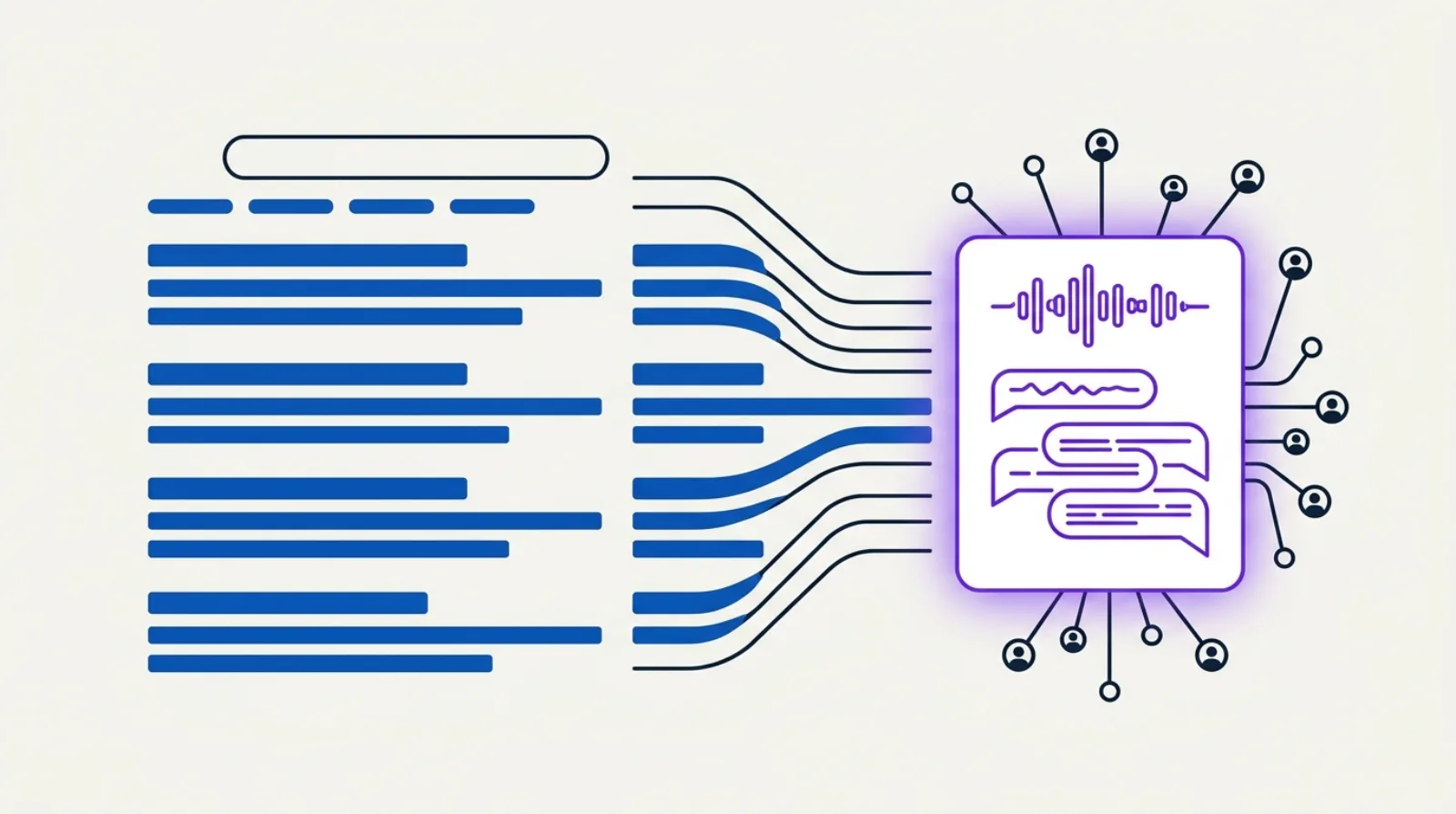
What quietly happened since 2024: search engines are no longer just directories. They are generative engines. They answer. And they cite a curated short-list of sources, not the 10 organic results of the old web. Your traditional SEO traffic no longer just needs to match keywords; it needs to become a source that these engines choose to cite.
That is exactly what GEO, Generative Engine Optimization, refers to. This guide explains what GEO is, how it differs from classic SEO, how AI engines choose their sources, and where to start in practice.
What is GEO, in one sentence
GEO (Generative Engine Optimization): the practices that aim to make a website visible, cited and recommended by generative search engines (Google AI Overviews, ChatGPT search, Perplexity, Bing Copilot, Claude, You.com, etc.).
Think of it as the natural evolution of SEO. Not a replacement, a new layer. You still do classic SEO to rank in Google search results. You do GEO to become a cited source in the generated answer users see before the organic results.
The term emerged in 2023-2024 in academic literature (paper GEO: Generative Engine Optimization published on arXiv in June 2024) and spread among practitioners in 2025.
Classic SEO vs GEO: what really changes
| Dimension | Classic SEO | GEO |
|---|---|---|
| Objective | Rank in the top 10 SERPs | Be cited as a source in the generated answer |
| Target | Relevance algorithm + crawling | LLM + engine retrieval (RAG) |
| Key metric | Average position, organic CTR | Citation rate, brand mention |
| Winning format | Long page, keyword-optimised | Short citable passages + clear structure + authority |
| Authority signal | Backlinks + on-page | Backlinks + mentions + factual consistency |
| Crawler | Googlebot | GPTBot, PerplexityBot, ClaudeBot, OAI-SearchBot, etc. |
| Business KPI | Organic traffic | Organic traffic + brand awareness via citations |
The shift is less violent than it sounds: 80 % of good SEO practices still apply. But 20 % do change, and those 20 % decide who gets cited in two years.
How AI engines pick their sources
This is the question that changes everything. Here is what we know, based on studies published by the main players in 2025 and 2026.
1. A retrieval step that looks like classic search
Most generative engines use a web index (their own or Bing/Google's) to fetch a short-list of candidate sources. This is where classic SEO still matters: if you are not in the top 30-50 for a query, you will not be in the candidate set.
2. A re-ranking on factual quality and structure
The LLM then reviews the candidates and picks those it will cite. Criteria that matter in 2026:
- Passage citability: ability to extract a sentence or paragraph that exactly answers the question, without reading the whole page.
- Factual consistency: no contradiction with other reliable sources. Pages with verifiable, numeric claims are preferred.
- Semantic structure: explicit H2/H3, FAQ schema, ordered lists, comparison tables.
- Domain authority: a recognised company blog gets cited more often than a personal blog, all else equal.
- Freshness: for time-sensitive topics (news, prices, regulation), publication / update date is heavily weighted.
3. A brand signal that is gaining weight
This is new and powerful. When a generative engine sees your brand mentioned by multiple third-party sources on a given topic, it tends to cite you more often. Ahrefs and Semrush both documented this effect in 2026: the correlation between cross-source brand mentions and citation rate is ≈0.7.
What to audit on the GEO side in practice
If you want to know where you stand, here is the minimal grid. You can run it manually or get your /100 score directly.
Accessibility to AI crawlers
- Does your
robots.txtallowGPTBot,PerplexityBot,ClaudeBot,Google-Extended,OAI-SearchBot? - Do you have an
llms.txtat the root (proposed standard adopted by Anthropic, Mistral and several publishers in 2025)? - Does your site server-render its HTML (SSR)? AI crawlers barely execute JavaScript.
Citable structure
- Does each article have a single, clear
<h1>? - Are sub-questions structured as H2/H3?
- Do you have FAQ schema JSON-LD on key pages?
- Are your factual data points (prices, dates, numbers) in tables or lists?
Schema.org and structured data
Article,BlogPostingorHowTodepending on page type?OrganizationwithsameAspointing to your social profiles?Personfor the author where relevant?FAQPagewhen you have a FAQ section?
Authority and freshness signals
- Publication date AND update date visible?
- Author identified with a credible bio?
- Outbound links to authoritative sources (institutional, academic)?
- Brand mentions on third-party sources (press, podcasts, other blogs)?
Passage citability
- Does each H2 open with a paragraph that summarises the answer in 2-3 sentences?
- Are there bolded key passages that the LLM can extract?
- Are there precise numbers (not "many" but "47 %", not "fast" but "in 12 minutes")?
This grid covers the fundamentals. To go deeper, get your full /100 score, free, in 90 seconds.
2026 numbers that should get you moving
- Google's AI Overviews now fires on about 30 % of informational queries in France (source: BrightEdge and SE Ranking studies, early 2026).
- On queries that trigger an AI Overview, average CTR to organic results drops 35 to 60 % (Ahrefs, February 2026).
- ChatGPT search crossed 400 million weekly users in Q1 2026 (OpenAI).
- Perplexity reports 30 million monthly active users in January 2026.
- Sites cited in AI Overviews see brand search +25 % on average over 3 months following first citation (Surfer study, 2026).
Concrete takeaway: if you wait until 2027 to start, you are replaying the situation of brands that discovered SEO in 2009. Still doable, but the field will already be occupied.
Where to start: 5 actions this week
No need to redo everything. Here are five high-leverage actions you can run in 5 days:
- Open your robots.txt to the right AI crawlers. Free, takes 5 minutes, and 30 % of French sites still block GPTBot and friends by default.
- Add an llms.txt at the root, a markdown manifesto summarising your value proposition, key pages and resources. Spec here.
- Restructure 3 existing high-traffic articles by putting the answer up top, using explicit H2s, and adding a FAQ at the end with FAQPage schema.
- Add Organization and Person schema on your key pages. 2 hours of work, benefits compound over years.
- Run a full GEO audit to get a baseline. That is exactly what SeAudit does in 90 seconds, /100 score, priority axes, action plan.
FAQ, GEO
Does GEO replace SEO?
No. GEO complements SEO. You still do classic SEO to rank in results pages, and you add GEO to be cited in generated answers. Both practices share 80 % of fundamentals (authority, quality content, clean technical structure).
How long does it take to see GEO results?
Faster than classic SEO in general: generative engines re-index and re-evaluate sources continuously. You can see a new article cited on Perplexity in less than 7 days. For Google AI Overviews, count 4 to 12 weeks depending on competition.
Do you need a blog to do GEO?
Not necessarily, but editorial content remains the most citable format. Product pages, FAQs, long guides and number-based studies are all eligible. The rule is: do you have something to say that answers a question people ask ChatGPT?
Which tools should I use to measure my GEO visibility?
In 2026, the ecosystem is maturing fast: Otterly, Profound, Goodie AI, AthenaHQ for citation tracking. Ahrefs and Semrush have integrated AI Overviews modules. And SeAudit covers the on-page + GEO audit part in 90 seconds, free. The right mix depends on your maturity.
Is GEO relevant for B2B SaaS?
Even more so than for B2C. B2B buyers intensively use ChatGPT, Perplexity and Claude to shortlist their tools. Being cited in the answer to "best [your category] tools in 2026" is an acquisition channel that did not exist 18 months ago.
What to do with already-indexed content that is not GEO-optimised?
Do not delete it. Take the 10 articles that bring you the most traffic and apply the GEO treatment (structure, FAQ, schema, citable passages). That is the fastest ROI.
Key takeaways
- GEO makes your site visible and cited by generative search engines (AI Overviews, ChatGPT, Perplexity, Claude).
- 80 % of SEO best practices still apply. 20 % change, and those 20 % decide who gets cited.
- AI engines retrieve a short-list of sources then re-rank on passage citability, structure, authority and freshness.
- Brand mentions carry unprecedented weight: being cited elsewhere increases your probability of being cited by LLMs.
- 5 actions this week: open robots.txt to AI bots, add llms.txt, restructure 3 top-traffic articles, deploy Organization/Person schema, run a baseline audit.
If you want to know where you stand without guessing, get your /100 score or browse all blog articles to dig into a specific topic.